
09
2025
-
12
Specification requirements for plastic cable ties of electronic devices
Author:
Specifications for Plastic Cable Ties in Electronic Equipment
Dimensional Requirements for Precision Bundling
Electronic equipment demands precise cable management to maintain signal integrity and prevent electromagnetic interference. Standard width ranges for plastic cable ties span from 2mm to 8mm, with narrower options (2–3mm) suited for lightweight applications like securing small-gauge wires in consumer electronics. Medium-width ties (4–5mm) balance flexibility and strength, ideal for organizing mid-sized cable bundles in servers or industrial control panels. Wider variants (6–8mm) resist pulling forces from heavy-duty cables, such as power cords in data centers or automotive wiring harnesses.
Length specifications vary based on equipment scale. Short ties (100–150mm) excel in confined spaces, like securing components inside compact routers or IoT devices. Medium-length ties (200–300mm) accommodate larger cable assemblies in desktop computers or audio-visual systems, while extended options (400–500mm) manage sprawling wire networks in industrial machinery or renewable energy installations.
Material Selection for Environmental Adaptability
The operational environment dictates material composition. Nylon 66 (PA66) dominates electronic applications due to its high tensile strength (up to 50kg) and resistance to temperatures ranging from -40°C to 85°C. This material’s UV stability ensures longevity in outdoor installations, such as solar panel wiring or telecommunications infrastructure. For harsher conditions, flame-retardant PA66 variants (rated V-0) meet safety standards for devices near heat sources or in enclosed spaces.
Polypropylene (PP) ties offer a cost-effective alternative for indoor applications with moderate stress, like organizing cables in home entertainment systems. However, their lower melting point (around 160°C) limits use near high-temperature components. In corrosive environments, such as chemical processing plants, acid-resistant coatings on nylon ties prevent degradation from vapors or liquids.
Functional Designs for Specialized Applications
Electronic equipment often requires tailored solutions beyond standard ties. Self-locking mechanisms with serrated teeth prevent slippage, critical for vibration-prone settings like automotive dashboards or aerospace electronics. Reusable ties with adjustable loops enable quick modifications during equipment upgrades, reducing downtime in server farms or medical devices.
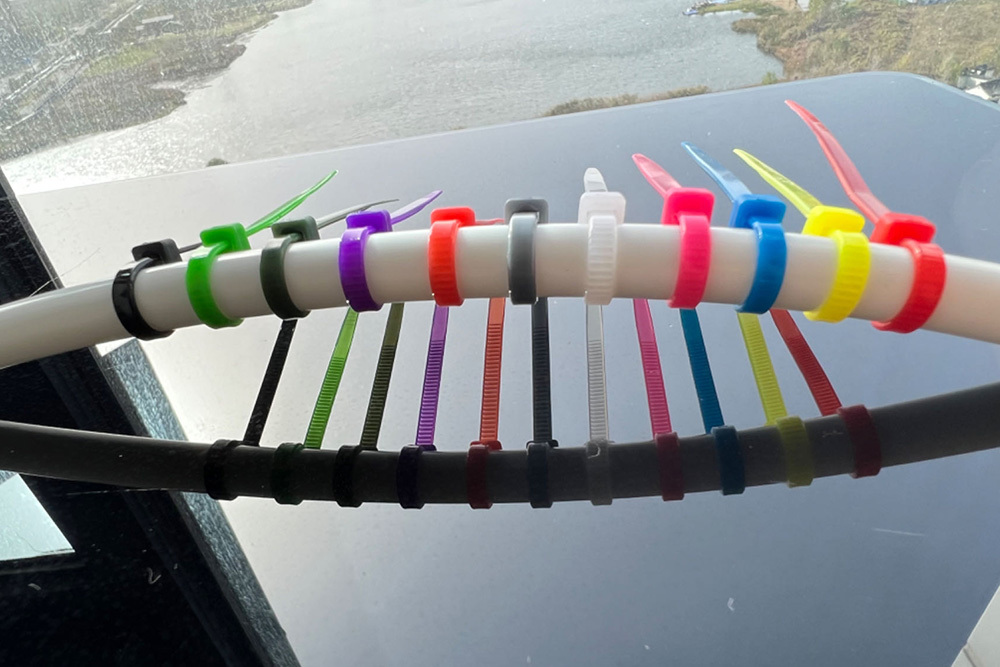
Color-coded ties streamline maintenance by visually distinguishing cable groups. For example, red ties might mark power cables, blue for data lines, and green for grounding wires in complex systems. Low-profile designs with flat heads minimize space occupation in compact devices, while rounded edges prevent damage to delicate insulation on high-speed data cables.
In high-security environments, tamper-evident ties with unique serial numbers or breakable seals deter unauthorized access to sensitive electronics. For applications requiring frequent disassembly, such as modular testing equipment, ties with quick-release tabs simplify cable management without compromising structural integrity.
plastic cable ties
Hot News
2025-12-10
Safety specifications for plastic cable ties for children's products
Children’s products demand materials that withstand physical stress and environmental exposure without compromising safety. Nylon 66 (PA66) is widely adopted due to its non-toxic composition, meeting UL 94V-2 flame-retardant standards to prevent fire hazards. This material resists temperatures from -40°C to 85°C, ensuring stability in varying climates, such as outdoor playgrounds or heated indoor spaces.
2025-12-10
Selection of plastic cable ties for new energy high-voltage lines
High-voltage cables in renewable energy installations, such as solar farms or wind turbines, generate electromagnetic fields and heat, requiring materials that resist degradation. Nylon 66 (PA66) reinforced with glass fibers is a common choice due to its high tensile strength (up to 70kg) and thermal stability, withstanding temperatures from -50°C to 120°C. This material’s low electrical conductivity minimizes energy loss and prevents short circuits, critical for maintaining system efficiency.
2025-12-09
Selection standards for plastic cable ties of ship cables
Marine environments expose cable ties to saltwater, UV radiation, and temperature fluctuations, demanding materials with superior durability. Nylon 66 (PA66) is widely adopted due to its high tensile strength (up to 50kg) and resistance to temperatures ranging from -40°C to 85°C. Its UV stability ensures longevity in outdoor installations, such as solar panel wiring or telecommunications infrastructure.
2025-12-09
Specification requirements for plastic cable ties of electronic devices
Electronic equipment demands precise cable management to maintain signal integrity and prevent electromagnetic interference. Standard width ranges for plastic cable ties span from 2mm to 8mm, with narrower options (2–3mm) suited for lightweight applications like securing small-gauge wires in consumer electronics.