
09
2025
-
12
Selection standards for plastic cable ties of ship cables
Author:
Selection Criteria for Plastic Cable Ties in Marine Applications
Material Composition for Environmental Resistance
Marine environments expose cable ties to saltwater, UV radiation, and temperature fluctuations, demanding materials with superior durability. Nylon 66 (PA66) is widely adopted due to its high tensile strength (up to 50kg) and resistance to temperatures ranging from -40°C to 85°C. Its UV stability ensures longevity in outdoor installations, such as solar panel wiring or telecommunications infrastructure. For applications near heat sources, flame-retardant PA66 variants (rated V-0) meet safety standards by preventing flame propagation.
In corrosive settings, acid-resistant coatings on nylon ties prevent degradation from vapors or liquids, extending service life in chemical processing plants. Polypropylene (PP) ties, while cost-effective, are limited to indoor use with moderate stress due to their lower melting point (around 160°C). Stainless steel ties, though not plastic, are highlighted for comparison in extreme conditions like offshore platforms, where their resistance to chemicals and high temperatures is critical.
Dimensional Specifications for Load and Space Optimization
The width of cable ties directly correlates with their load-bearing capacity. Narrow ties (2–3mm) suit lightweight tasks, such as securing small-gauge wires in consumer electronics, while medium-width ties (4–5mm) balance flexibility and strength for mid-sized cable bundles in servers or industrial control panels. Wide ties (6–8mm) resist pulling forces from heavy-duty cables, like power cords in data centers or automotive wiring harnesses.
Length selection depends on equipment scale. Short ties (100–150mm) excel in confined spaces, such as organizing charging cables in routers, whereas medium-length ties (200–300mm) accommodate larger assemblies in desktop computers. Extended options (400–500mm) manage sprawling wire networks in industrial machinery. Proper spacing between ties is equally vital; for example, marine standards recommend a 300mm interval for horizontal cable runs, expanded to 600mm for downward-supported installations to reduce vibration-induced stress.
Functional Designs for Specialized Marine Challenges
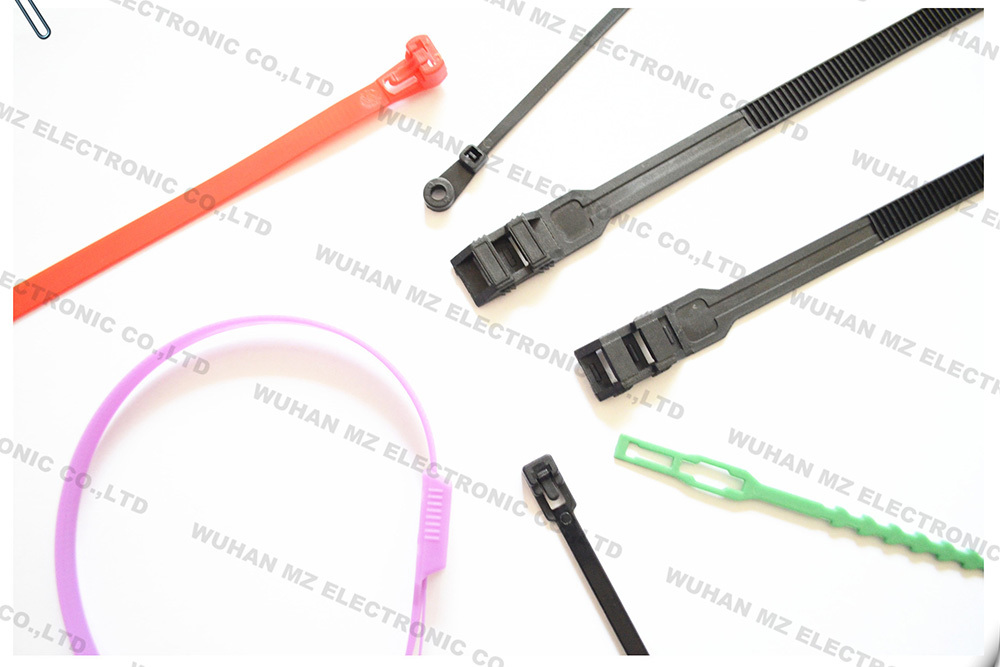
Marine applications often require tailored solutions beyond standard ties. Self-locking mechanisms with serrated teeth prevent slippage in vibration-prone settings, such as automotive dashboards or aerospace electronics. Reusable ties with adjustable loops enable quick modifications during equipment upgrades, minimizing downtime in server farms. Color-coded ties streamline maintenance by visually distinguishing cable groups—red for power, blue for data, and green for grounding—in complex systems.
Low-profile designs with flat heads minimize space occupation in compact devices, while rounded edges prevent damage to delicate insulation on high-speed data cables. For high-security environments, tamper-evident ties with unique serial numbers deter unauthorized access to sensitive electronics. In applications requiring frequent disassembly, such as modular testing equipment, ties with quick-release tabs simplify cable management without compromising structural integrity.
Compliance with Marine Safety and Installation Standards
Marine cable ties must adhere to industry-specific regulations to ensure safety and reliability. Standards like CB/T 3496-1992 outline requirements for material strength, flame resistance, and environmental adaptability. For instance, ties used in fire-resistant compartments must withstand prolonged exposure to high temperatures without releasing toxic fumes.
Installation practices further influence performance. Ties should not be stretched beyond their rated capacity to avoid brittleness, and excess material must be trimmed to prevent abrasion. In wooden or composite panels, ties should be spaced 80–200mm apart to distribute stress evenly. When securing cables to metal structures, non-conductive coatings on ties prevent galvanic corrosion, extending service life in humid or saltwater environments.
plastic cable ties
Hot News
2025-12-10
Safety specifications for plastic cable ties for children's products
Children’s products demand materials that withstand physical stress and environmental exposure without compromising safety. Nylon 66 (PA66) is widely adopted due to its non-toxic composition, meeting UL 94V-2 flame-retardant standards to prevent fire hazards. This material resists temperatures from -40°C to 85°C, ensuring stability in varying climates, such as outdoor playgrounds or heated indoor spaces.
2025-12-10
Selection of plastic cable ties for new energy high-voltage lines
High-voltage cables in renewable energy installations, such as solar farms or wind turbines, generate electromagnetic fields and heat, requiring materials that resist degradation. Nylon 66 (PA66) reinforced with glass fibers is a common choice due to its high tensile strength (up to 70kg) and thermal stability, withstanding temperatures from -50°C to 120°C. This material’s low electrical conductivity minimizes energy loss and prevents short circuits, critical for maintaining system efficiency.
2025-12-09
Selection standards for plastic cable ties of ship cables
Marine environments expose cable ties to saltwater, UV radiation, and temperature fluctuations, demanding materials with superior durability. Nylon 66 (PA66) is widely adopted due to its high tensile strength (up to 50kg) and resistance to temperatures ranging from -40°C to 85°C. Its UV stability ensures longevity in outdoor installations, such as solar panel wiring or telecommunications infrastructure.
2025-12-09
Specification requirements for plastic cable ties of electronic devices
Electronic equipment demands precise cable management to maintain signal integrity and prevent electromagnetic interference. Standard width ranges for plastic cable ties span from 2mm to 8mm, with narrower options (2–3mm) suited for lightweight applications like securing small-gauge wires in consumer electronics.