
27
2025
-
12
The method of marking the use of plastic cable ties for cables
Author:
Labeling Cables with Plastic Zip Ties: Practical Methods for Organization
Managing multiple cables in workspaces, homes, or industrial settings can quickly become chaotic without proper labeling. Plastic zip ties offer a simple, cost-effective way to mark cables by purpose, destination, or function. Below are actionable strategies to implement this system efficiently without relying on specialized tools or expensive solutions.
Using Color-Coded Zip Ties for Quick Identification
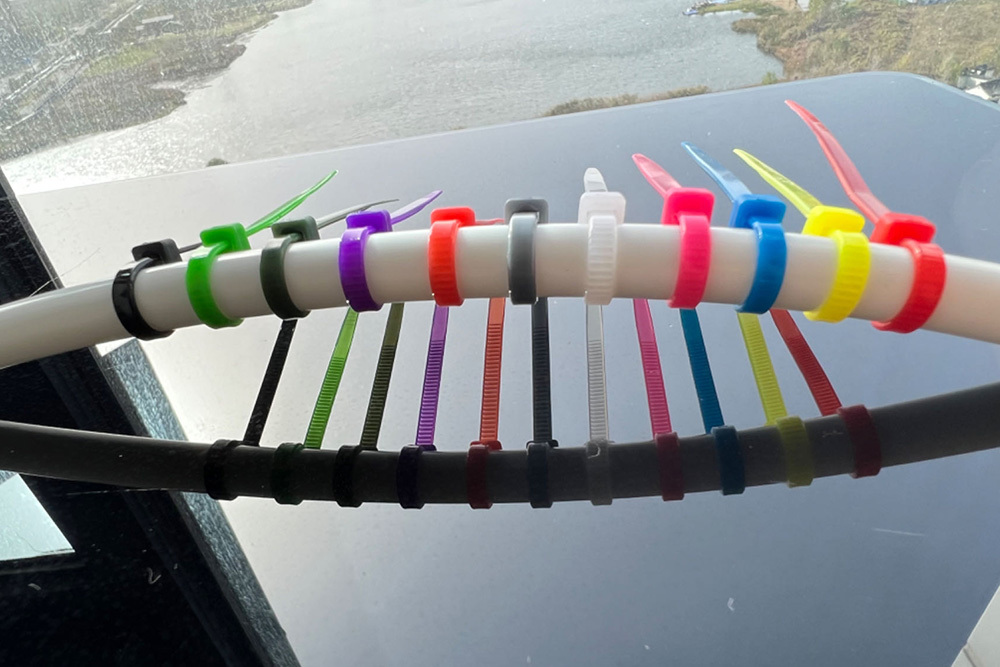
One of the simplest methods to label cables is by using zip ties in different colors. Assign each color to a specific category, such as power cables, data lines, or audio-visual connections. For example, red ties could indicate high-voltage power cables, while blue ties might represent Ethernet or network cables. This visual system allows technicians or users to identify cables at a glance, reducing errors during maintenance or troubleshooting.
To implement this, start by auditing your cables and grouping them by function. Attach a colored tie near the connector or along the cable’s length, ensuring it’s visible when cables are bundled together. For consistency, create a legend or chart (kept nearby) that explains what each color represents. This is especially useful in shared spaces where multiple people interact with the cables.
If you don’t have access to colored ties, use permanent markers to color the plastic itself. Choose bright, contrasting shades that won’t fade easily over time. Test the marker on a spare tie first to ensure the ink adheres properly and remains legible.
Adding Text or Symbols with Permanent Markers
For more detailed labeling, write directly on zip ties using a fine-tip permanent marker. This method works well when you need to specify cable destinations, such as “Router” or “Monitor,” or indicate voltage levels like “12V” or “24V.” Keep the text short and clear to ensure readability, especially in low-light environments.
Before marking, clean the zip tie’s surface with a dry cloth to remove dust or grease, which could smudge the ink. Write the label near the head of the tie, where it’s less likely to bend or wear over time. For bundled cables, place the labeled tie on the outside of the group so the text remains visible without untangling the entire bundle.
Symbols or abbreviations can also streamline labeling. For instance, use “PWR” for power, “NET” for network, or “AV” for audio-visual cables. Create a standardized set of symbols for your workspace to avoid confusion. If working with international teams, ensure symbols are universally understood or accompanied by brief text.
Combining Zip Ties with Printed Labels for Durability
For environments where labels need to withstand frequent handling, moisture, or extreme temperatures, combine zip ties with printed adhesive labels. Print labels on waterproof material, such as vinyl or laminated paper, and attach them to the zip tie using clear tape or a small dab of glue. This method ensures labels remain intact even in harsh conditions.
To apply this, cut the printed label into a small strip (no wider than the zip tie) and wrap it around the tie’s body. Secure the ends with tape or glue, ensuring the label sits flat against the plastic. Avoid covering the locking mechanism, as this could interfere with the tie’s functionality.
For added durability, laminate the labels before attaching them. This protects the text from fading, tearing, or smudging. If you don’t have a laminator, use clear packing tape as a makeshift solution by wrapping it tightly around the label and zip tie.
Creating a Tiered Labeling System for Complex Setups
In setups with numerous cables, such as server rooms or entertainment centers, a tiered labeling system can enhance organization. Use zip ties to group cables by function (e.g., all power cables together), then label each group with a primary identifier. Within each group, add secondary labels to distinguish individual cables.
For example, bundle all power cables with a red zip tie and label the tie “Power.” Then, use smaller zip ties or markers to label each cable within the bundle with its destination, like “PC” or “Monitor.” This approach reduces clutter while providing detailed information where needed.
Stagger the labels along the cable’s length to avoid overlapping. Place primary labels near the source (e.g., the power outlet) and secondary labels closer to the device. This makes it easier to trace cables from end to end without confusion.
Ensuring Labels Remain Visible in Tight Spaces
In cramped areas, such as behind desks or inside cabinets, visibility is key. Use longer zip ties to extend labels away from bundled cables, making them easier to read without moving the entire setup. Attach the label to the tail end of the tie, leaving enough slack to position it outward.
For cables routed through walls or conduits, label them at both ends. This ensures you can identify the cable’s purpose regardless of which side you’re accessing. Use a consistent labeling format (e.g., color + text) at each endpoint to maintain clarity.
If space is extremely limited, consider using smaller zip ties or cutting the tail of the tie short after labeling. This minimizes bulk while keeping the label intact. Always test the tie’s grip after trimming to ensure it remains secure.
By integrating these methods into your cable management routine, you can create a system that’s both functional and easy to maintain. Start with a small section of your workspace to test the approach, then expand it gradually as you refine your labeling strategy.
plastic cable ties
Hot News
2025-12-27
The method of marking the use of plastic cable ties for cables
Managing multiple cables in workspaces, homes, or industrial settings can quickly become chaotic without proper labeling. Plastic zip ties offer a simple, cost-effective way to mark cables by purpose, destination, or function. Below are actionable strategies to implement this system efficiently without relying on specialized tools or expensive solutions.
2025-12-27
The spacing of plastic cable ties for wire sorting and binding
Managing tangled cables efficiently requires understanding how to space plastic zip ties correctly. Proper spacing ensures cables stay secure, organized, and protected from damage while maintaining a clean workspace. Below are practical insights for achieving professional-grade cable management without specialized tools or expensive solutions.
2025-12-23
Tips for using plastic cable ties in series on clothes hangers
Plastic zip ties, often overlooked as simple fastening tools, can transform ordinary hangers into versatile storage solutions. Whether you’re looking to maximize closet space, organize accessories, or create custom hanging systems, these flexible ties offer a cost-effective and durable method for connecting hangers in innovative ways. Below are practical techniques to enhance your hanger setup using plastic zip ties.
2025-12-23
The method of locking sealed bags with plastic cable ties
Plastic zip ties, known for their versatility in bundling and fastening, are also effective tools for locking sealable bags tightly. Whether storing food, organizing small items, or protecting sensitive materials, using zip ties ensures airtight or waterproof closures when done correctly. Below are step-by-step techniques to achieve secure seals without damaging the bag or compromising its contents.