
16
2025
-
12
Techniques for fixing multiple cables in parallel
Author:
Effective Techniques for Parallel Cable Fixation in Complex Systems
When managing multiple cables in parallel configurations, engineers face challenges ranging from electromagnetic interference (EMI) mitigation to structural stability. This guide explores practical solutions derived from real-world applications, focusing on industrial, automotive, and high-speed data transmission environments.
Mechanical Clamping Systems for Multi-Cable Arrays
Layered Clamping with Modular Components
In scenarios requiring high-density cable management, such as server racks or automotive harnesses, modular clamping systems demonstrate superior performance. These assemblies typically consist of three core elements:
- Base plates with embedded guides: Precision-engineered channels ensure consistent spacing between cables, preventing contact-induced wear.
- Interlocking clamps: Two-piece designs with spring-loaded mechanisms allow for tool-free installation while maintaining consistent pressure across all cables.
- Strain relief brackets: Attached at cable entry/exit points, these components distribute mechanical stress evenly, reducing fatigue failure risks.
A patented solution from the marine industry illustrates this approach effectively. The system uses symmetrical clamping blocks with axial grooves to maintain parallel alignment of up to eight cables. Each block connects to a reinforced base via bolts, with integrated bending limiters at both ends to prevent kinking during thermal expansion cycles.
Single-Screw Locking Mechanism for Dual-Cable Bundles
For applications involving only two parallel cables, a minimalist approach using standard hardware components offers surprising reliability. The technique involves:
- Cable preparation: Splitting each cable's insulation jacket longitudinally for 30-50mm to expose inner conductors.
- Cross-weaving: Interlacing the split sections in an alternating pattern to create mechanical interlock.
- Compression assembly: Placing the prepared cables between two flat washers, then securing with a bolt and locknut.
This method, demonstrated in electrical maintenance videos, achieves pull-out resistance exceeding 120N while maintaining electrical isolation. The key advantage lies in its simplicity—requiring only basic tools and no specialized connectors.
Adhesive Bonding for High-Speed Data Cables
Continuous Bonding Process for Twin-Axial Cables
High-speed data transmission systems demand precise parallel alignment to maintain signal integrity. A novel bonding process addresses this by:
- Initial alignment: Using guide fixtures to position two cables with their insulation layers in direct contact.
- Liquid adhesive application: Automated dispensing systems apply a low-viscosity, thermally conductive adhesive along the contact zone.
- Curing phase: Passing the assembly through a controlled-temperature tunnel solidifies the adhesive, creating a rigid bond without deforming conductors.
This technique, detailed in patent documentation, enables 40Gbps data rates over 10-meter runs by maintaining consistent impedance profiles. The bonded pairs exhibit less than 0.5mm deviation over their entire length, crucial for differential signaling applications.
Selective Bonding for Mixed-Signal Cables
When parallel cables carry both power and data signals, selective bonding prevents EMI contamination. The solution involves:
- Segmented bonding: Applying adhesive only at 200mm intervals along the cable run, creating "floating" sections between bond points.
- Material selection: Using dielectric adhesives with specific permittivity values to act as RF filters at targeted frequencies.
- Grounding integration: Incorporating conductive adhesive strips at strategic locations to shunt high-frequency noise to chassis ground.
This approach, validated in automotive infotainment systems, reduced crosstalk by 18dB compared to fully clamped assemblies while maintaining mechanical robustness.
Hybrid Solutions for Dynamic Environments
Spring-Loaded Cable Guides for Vibrating Systems
In machinery with constant vibration, such as CNC equipment or renewable energy installations, hybrid fixation combines mechanical clamping with energy dissipation:
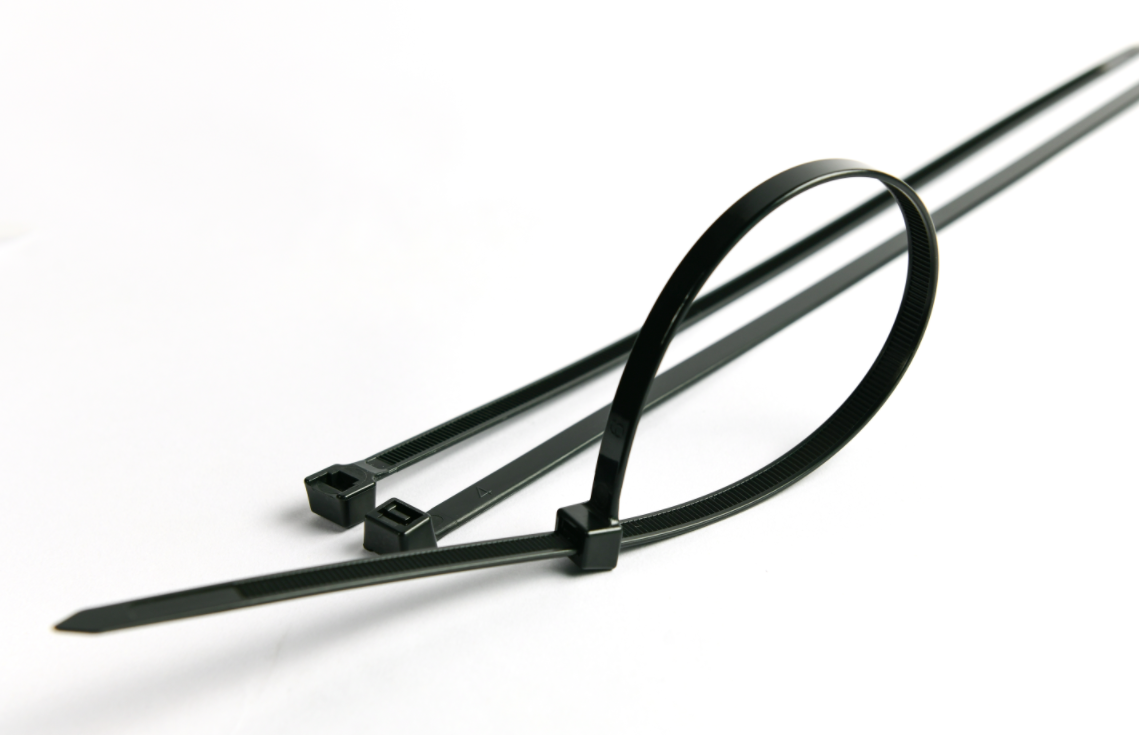
- Base clamping: Standard cable ties or brackets secure cables to stationary structures.
- Dynamic guides: Silicone-based sleeves with internal spring coils wrap around cable bundles, allowing 5-10mm axial movement while maintaining parallel alignment.
- Damping layers: Neoprene pads between clamps and mounting surfaces absorb residual vibrations.
Testing in wind turbine nacelles showed this configuration reduced cable fatigue failures by 73% over traditional rigid mounts, extending service life from 8 to 15 years.
Shape-Memory Alloy Retainers for Temperature-Variable Settings
For environments with extreme temperature fluctuations, such as aerospace applications, shape-memory alloy (SMA) components offer adaptive fixation:
- Initial shaping: SMA wires are trained to form perfect cable-holding loops at room temperature.
- Thermal activation: At elevated temperatures, the wires contract slightly to increase clamping force; at low temperatures, they expand to prevent over-constriction.
- Redundant locking: Mechanical latches ensure retention even if SMA properties degrade over time.
NASA trials demonstrated this system maintained cable alignment within ±0.2mm across -55°C to +125°C ranges, critical for satellite solar array deployments.
Implementation Considerations
When selecting fixation methods, engineers must evaluate:
- Cable diameter ratio: Clamping systems should accommodate 70-90% of the cable's outer diameter for optimal grip without deformation.
- Thermal expansion coefficients: Materials with matching CTE values prevent stress buildup in temperature-variable environments.
- Maintenance access: Design assemblies to allow cable replacement without dismantling entire fixation systems.
By combining these techniques with proper cable routing principles—such as maintaining minimum bend radii and avoiding acute angles—systems can achieve both mechanical reliability and electrical performance across diverse applications.
plastic cable ties
Hot News
2025-12-16
Techniques for fixing multiple cables in parallel
When managing multiple cables in parallel configurations, engineers face challenges ranging from electromagnetic interference (EMI) mitigation to structural stability. This guide explores practical solutions derived from real-world applications, focusing on industrial, automotive, and high-speed data transmission environments.
2025-12-16
Control method for the tension of plastic cable ties
Plastic cable ties derive their strength from their material composition and width, which dictate their maximum tension capacity. Thinner ties (3–5mm) are suitable for lightweight applications like securing papers or small cables, while wider ties (8–12mm) handle heavier loads such as industrial equipment or bundled pipes. Before tightening, assess the load’s weight and fragility to avoid overstressing the tie or the secured item.
2025-12-15
Plastic cable tie threading operation skills
Essential Techniques for Threading Plastic Cable Ties Efficiently Proper Hand Positioning and Grip Control Mastering hand placement is critical for smooth threading. Hold the cable tie head firmly between your thumb and index finger, keeping the tail end aligned with your workspace. For narrow ties (3–5mm width), use a pincer grip to maintain precision, while wider ties (8–12mm) require a full-hand grasp to distribute pressure evenly. Avoid bending the tail excessively, as this can create kinks that hinder threading. When working in tight spaces, rotate your wrist slightly to adjust the angle of the tie. This maneuver helps navigate corners or gaps without forcing the material, which could weaken its locking mechanism. For overhead applications, stabilize your elbow against a surface to reduce hand fatigue and improve accuracy. Grip strength matters during initial insertion. Apply moderate pressure to push the tail through the head’s locking gear, but avoid squeezing too hard, which may deform the plastic. If resistance occurs, wiggle the tail gently while maintaining forward momentum to ease it through the channel. Navigating Tight Spaces and Complex Configurations Threading cable ties through confined areas demands strategic planning. Start by assessing the path’s layout, identifying potential obstructions like wires, pipes, or structural components. For straight-line threading, align the tie’s tail with the intended route before inserting it into the head, minimizing mid-process adjustments. In multi-angle setups, such as bundling cables around a corner, use a staggered approach. Thread the tie partially through the first opening, then rotate the head to align with the next segment. This step-by-step method prevents the tail from binding against obstacles. For loops or circular patterns, create a small bend at the tail’s tip to guide it through the head more easily. When dealing with overlapping materials, like securing layers of insulation, separate the components slightly to create a clear threading path. Insert the tie between the layers at a 45-degree angle, then level it out as you pull it through. This technique reduces friction and ensures the tie sits flush against the surface. Managing Threading Resistance and Preventing Jams Resistance during threading often stems from misalignment or material deformation. If the tail gets stuck, avoid pulling backward, as this can worsen the jam. Instead, gently twist the head clockwise or counterclockwise while applying light forward pressure. The rotational motion helps realign the locking gear with the tail’s ridges. Lubrication can reduce friction in stubborn cases. Apply a small amount of silicone-based spray or dry lubricant to the tail’s surface, focusing on the area near the head. Avoid oil-based products, which may attract dust or degrade the plastic over time. After lubricating, wipe away excess residue to maintain a clean threading path. Preventative measures minimize jams before they occur. Inspect the head’s locking gear for debris or burrs that could obstruct the tail. Use a needle or thin tool to clear any blockages gently. Additionally, store cable ties in a dry, cool environment to prevent warping, which alters their dimensions and complicates threading. Optimizing Threading Speed for High-Volume Tasks Efficiency improves with practice and ergonomic adjustments. Develop a rhythm by threading multiple ties in sequence without pausing between each step. For repetitive tasks, position components within easy reach to reduce movement time. Use a tray or magnetic holder to organize ties by size, ensuring quick access during assembly. Pre-threading techniques save time in bulk applications. For example, when securing bundles of cables, lay the ties out in advance and thread them loosely around the group before tightening. This approach allows you to adjust positions quickly without rethreading each tie individually. Leverage tool-assisted methods for heavy-duty projects. Tensioning devices with built-in threading guides streamline the process by aligning the tail automatically as you pull. These tools are particularly useful for wide or high-tension ties, where manual threading requires significant effort.
2025-12-15
Standard strapping steps for plastic cable ties
Proper preparation ensures optimal performance and prevents damage during the bundling process. Begin by selecting strapping material suited to the load’s weight and environmental conditions. For lightweight items like cardboard boxes, narrow strapping (3–5mm width) is sufficient, while heavier loads such as machinery parts require wider strapping (8–12mm). Inspect the strapping for defects like cracks, uneven edges, or discoloration, which could compromise strength.