
01
2025
-
12
Specification standards for industrial-grade plastic cable ties
Author:
Industrial-Grade Plastic Cable Tie Specifications: A Detailed Guide
Understanding Key Parameters
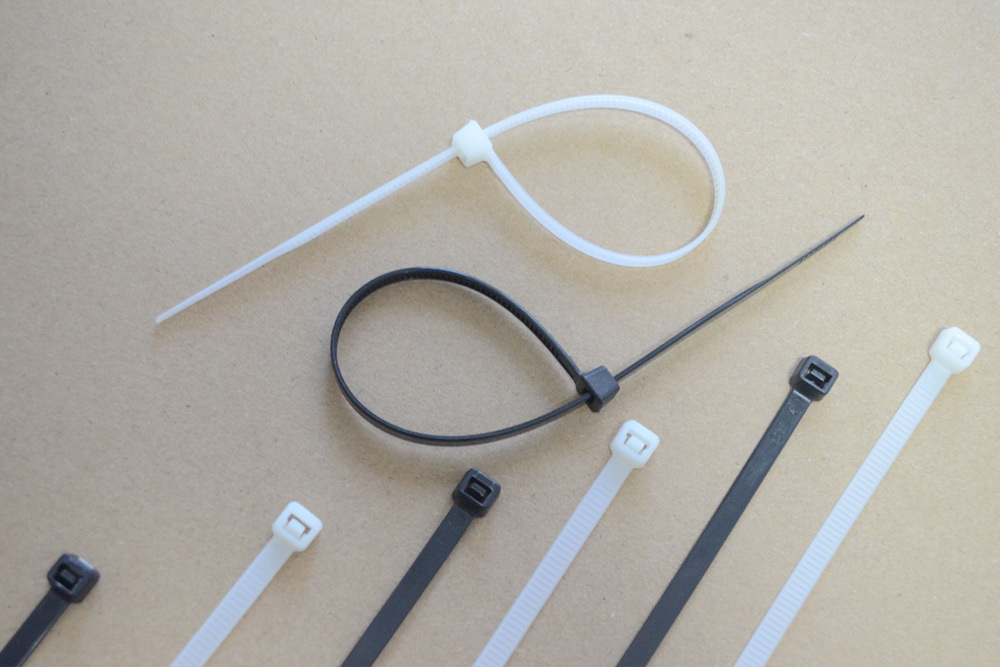
Industrial-grade plastic cable ties are engineered to meet rigorous demands, with specifications tailored to specific applications. The primary parameters include width, length, material composition, and load capacity.
- Width and Length:
- Common width ranges span from 2.5mm to 12mm, with longer ties (e.g., 300mm–1200mm) designed for bundling larger objects like hoses or structural beams.
- Shorter ties (e.g., 100mm–200mm) are ideal for securing cables, wires, or small components.
- The ratio of width to捆扎物 diameter (bundled object) follows industry guidelines: 0.45 for general line bundles, 0.8 for steel pipes, and 1.5 for oil pipes.
- Material Composition:
- Nylon 66 (PA66): Dominates industrial applications due to its high tensile strength (≥50kg for standard types, ≥80kg for reinforced variants), resistance to temperatures between -40°C and 120°C, and excellent durability against oils and chemicals.
- Polypropylene (PP): Used in lighter-duty scenarios, with a tensile strength of ≤40kg and a temperature range of 20°C–80°C. It excels in acid/alkali resistance but is less durable than nylon.
Performance Standards and Certifications
Industrial cable ties must comply with international standards to ensure safety and reliability.
- Flame Retardancy:
- UL94V-2 certification is mandatory for applications in electrical enclosures, data centers, and public infrastructure. This standard ensures ties self-extinguish within 30 seconds after ignition.
- Temperature Resistance:
- Ties labeled with "120°C" are engineered for engine compartments, boiler rooms, or industrial machinery exposed to high heat.
- For extreme cold environments (e.g., outdoor installations in northern regions), nylon 66 variants resist brittleness at temperatures as low as -40°C.
- Food-Grade Compliance:
- Ties marked with a "food-grade" symbol (e.g., a fork and knife) are manufactured without harmful additives, making them suitable for food processing equipment, packaging machinery, and cleanroom environments.
Application-Specific Selection Criteria
Choosing the right tie involves aligning specifications with operational conditions.
- Automotive Manufacturing:
- Black, 4200-series ties (e.g., 4.2mm width × 200mm length) with UL94V-2 ratings are used for engine wiring harnesses. These ties withstand vibrations, oils, and temperatures up to 120°C.
- Electrical Engineering:
- Orange, 3100-series ties (2.5mm × 100mm) are preferred for cable management in power distribution boxes. Their flame-retardant properties and compact size ensure safety in confined spaces.
- Outdoor Construction:
- Heavy-duty 8300-series ties (7.2mm × 300mm) with UV-resistant coatings are deployed for securing scaffolding, tarps, or hoses. These ties resist degradation from sunlight and moisture, ensuring long-term reliability.
Quality Assurance and Testing Protocols
Manufacturers adhere to strict testing protocols to validate performance.
- Tensile Testing:
- Ties are stretched at a rate of 250±50mm/min until failure. The breaking load must exceed the stated rating by at least 20% (e.g., a tie rated for 50kg must withstand ≥60kg).
- Environmental Simulation:
- Accelerated aging tests expose ties to 120 hours of UV radiation (UVB313 lamp, 0.76W/m²) to assess color stability and material integrity. Post-test, ties must retain ≥85% of their original tensile strength.
- Low-temperature flexibility tests involve cooling ties to -40°C for 2 hours, followed by immediate bending. Ties must not crack or break during manipulation.
- Safety Margins:
- Industry best practices recommend selecting ties with a safety factor of 1.5–2x the anticipated load. For example, a bundle weighing 20kg should use ties rated for ≥40kg.
plastic cable ties
Hot News
2026-09-15
Ultimate Guide to Nylon Cable Ties: Sizes, Applications, and Selection Criteria
Explore the ultimate guide to nylon cable ties. Learn about PA66 material properties, comprehensive size & tensile strength charts, and outdoor UV applications.
2026-08-28
PA6 vs PA66 for Nylon Cable Ties: How to Choose the Right Material
PA6 and PA66 are two commonly considered materials for nylon cable ties. This guide compares their mechanical performance, heat resistance, toughness, moisture absorption, processing characteristics, cost, and application suitability to help buyers select the right material for their requirements.
2026-04-10
No More Brittleness: All-Weather Performance Ties for Extreme Environments
Tired of cable ties snapping in cold or dry weather? Our impact-modified PA66 ties are engineered for all-weather performance, ensuring maximum flexibility and reliability from Australia to Northern Europe。
2026-01-19
Electric Cable Tie Gun Operating Instructions
An electric cable tie gun is a handy tool that simplifies the process of securing cable ties, making it faster and more efficient compared to manual methods. Whether you're working on electrical installations, organizing cables in a data center, or bundling items for shipping, understanding how to properly use an electric cable tie gun is essential. Here's a detailed guide to help you get started.
2026-01-18
The precise tension control method for cable guns
When working with cable tie guns, achieving the right tension is crucial for ensuring secure and professional-looking installations. Whether you're bundling cables, securing equipment, or organizing items, precise tension control prevents over-tightening, which can damage delicate components, and under-tightening, which may lead to loosening over time. Here are some effective methods to help you master precise tension control with a cable tie gun.