
07
2025
-
09
A convenient type of plastic cable tie to use
Author:
User-Friendly Plastic Zip Tie Varieties for Diverse Applications
Plastic zip ties are indispensable tools for organizing, securing, and bundling items across industries and daily tasks. Their convenience stems from designs tailored to specific needs, such as ease of use, reusability, or adaptability to challenging environments. Below are practical types of plastic zip ties engineered to simplify installation, enhance functionality, and address common user challenges without requiring specialized tools or expertise.
Releasable Zip Ties for Temporary or Adjustable Fastening
Releasable plastic zip ties are designed with a built-in mechanism that allows users to loosen or remove the tie without cutting it. This feature is achieved through a tab or lever on the head, which disengages the locking pawl from the teeth when pressed. Unlike standard zip ties, which are permanent, releasable variants offer flexibility for applications requiring frequent adjustments, such as securing cables during IT setups or organizing tools in workshops. Their ability to be reused multiple times reduces waste and costs, making them eco-friendly alternatives for temporary projects.
The release mechanism is engineered for durability, ensuring it withstands repeated use without breaking. Some designs incorporate a dual-action tab that requires slight pressure to prevent accidental disengagement, while others use a sliding lever for effortless operation. The strap material retains its tension even after being loosened, allowing users to re-tighten it to the desired level without compromising security. This adaptability is particularly valuable in dynamic environments, such as event staging or retail displays, where components may need to be repositioned frequently.
Releasable zip ties are also popular in prototyping and testing phases, where quick iterations are necessary. For example, engineers may use them to bundle prototype wiring harnesses before finalizing the design, enabling easy modifications without discarding materials. Similarly, gardeners and farmers rely on these ties to train plants or secure trellises, adjusting the grip as the plants grow. Their versatility extends to household tasks, such as organizing craft supplies or securing holiday decorations, where temporary fastening is preferred.
Low-Tension or Gentle-Grip Zip Ties for Delicate Materials
Certain applications demand a lighter touch to avoid damaging fragile items, such as optical fibers, medical tubing, or decorative elements. Low-tension zip ties address this need by incorporating a flexible strap or a modified locking mechanism that reduces clamping force. Unlike standard ties, which tighten aggressively, these variants distribute pressure evenly, preventing crushing or deformation. Their design is ideal for industries like telecommunications, where protecting fiber-optic cables during installation is critical, or healthcare, where securing IV lines without restricting flow is essential.
The strap material in low-tension zip ties often features a softer, more pliable composition, such as low-density polyethylene (LDPE) or modified nylon. This flexibility allows the tie to conform to irregular shapes without digging into the surface. Some models include a textured or ribbed strap to enhance grip on slippery materials, ensuring the tie stays in place without over-tightening. The locking mechanism may also be adjusted to engage at lower tension thresholds, providing a secure hold without excessive force.
These zip ties are equally useful in creative and artistic projects, such as bundling flowers, securing fabric, or assembling costumes. Their gentle grip ensures materials remain intact during handling, while their one-piece design simplifies cleanup after events or exhibitions. In automotive applications, low-tension ties are used to organize wiring harnesses in tight spaces, preventing damage to insulation or connectors. Their ability to balance security and delicacy makes them indispensable in precision-focused industries.
Push-Mount Zip Ties for Quick Installation Without Tools
Push-mount zip ties streamline the fastening process by eliminating the need to thread the strap through the head manually. Instead, these ties feature a pre-loaded head with an open channel, allowing users to simply push the strap into place. The locking mechanism engages automatically as the strap is inserted, creating a secure hold in seconds. This design is particularly advantageous in high-volume applications, such as assembling electronics or packaging goods, where speed and efficiency are paramount.
The head of a push-mount zip tie often includes a mounting hole or clip, enabling users to attach the tie directly to a surface without additional hardware. This feature is useful for securing cables to walls, desks, or equipment racks, keeping workspaces organized and reducing clutter. Some variants incorporate a pivoting head that adjusts to different angles, accommodating awkward installation spaces or curved surfaces. The strap material remains flexible during insertion, bending easily to navigate tight corners or complex layouts.
Push-mount zip ties are also popular in automotive manufacturing, where they are used to route wiring harnesses along vehicle frames or under dashboards. Their tool-free installation reduces assembly time and minimizes the risk of errors, such as misaligned components or loose connections. In construction, these ties help secure pipes or conduits to structural elements, ensuring compliance with safety standards without slowing down progress. Their intuitive design makes them accessible to users of all skill levels, from DIY enthusiasts to professional technicians.
Color-Coded Zip Ties for Enhanced Organization and Identification
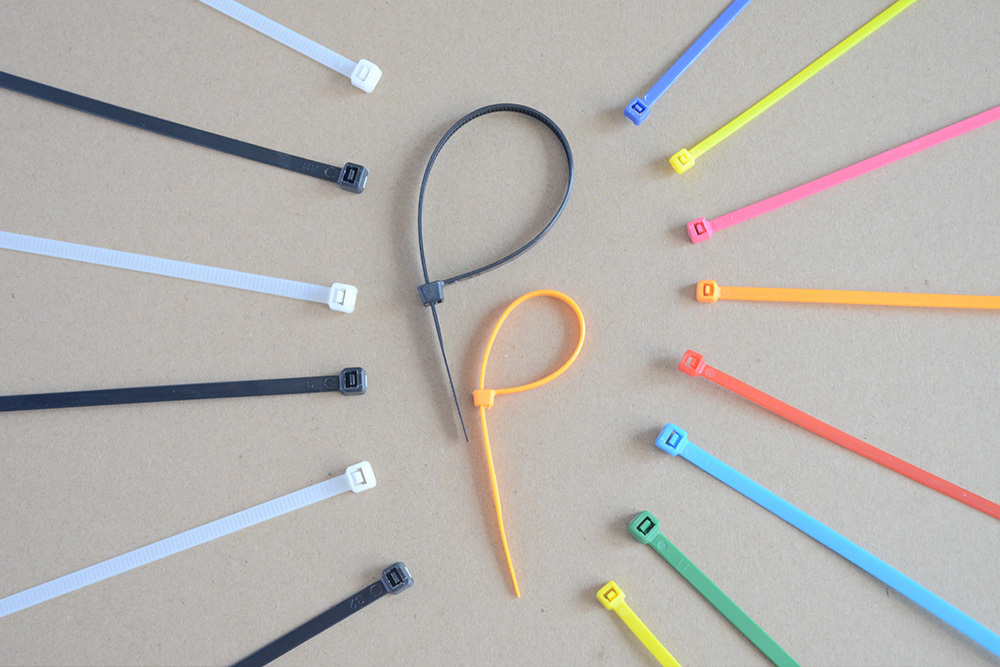
While not a structural innovation, color-coded zip ties significantly improve user convenience by enabling quick visual identification of bundled items. These ties are available in a range of hues, allowing users to assign specific colors to different categories, such as electrical phases, network cables, or inventory types. For example, red ties might indicate high-voltage wires, while blue ties could denote low-voltage systems, simplifying maintenance and troubleshooting in complex setups.
The color is typically integrated into the material during manufacturing, ensuring it remains vibrant and resistant to fading over time. Some color-coded zip ties also feature UV stabilization, making them suitable for outdoor applications where prolonged sun exposure could degrade standard dyes. In industrial settings, these ties help workers adhere to safety protocols by clearly marking hazardous materials or emergency shutoff points.
Beyond functionality, color-coded zip ties add aesthetic value to projects, such as event decorations or craft assemblies, where uniformity or thematic consistency is desired. Educators and trainers use them to demonstrate organizational principles in classrooms or workshops, teaching students how to categorize and manage resources effectively. Their simplicity and versatility make them a valuable addition to any toolkit, enhancing efficiency and reducing errors through visual clarity.
From temporary adjustments to permanent installations, user-friendly plastic zip ties cater to a wide range of needs through thoughtful design modifications. Whether prioritizing reusability, gentle grip, or rapid installation, these variants simplify tasks while maintaining the reliability and durability expected of traditional zip ties. Their adaptability ensures they remain essential tools in both professional and personal contexts, addressing everyday challenges with innovative solutions.
plastic cable ties
Hot News
2026-09-15
Ultimate Guide to Nylon Cable Ties: Sizes, Applications, and Selection Criteria
Explore the ultimate guide to nylon cable ties. Learn about PA66 material properties, comprehensive size & tensile strength charts, and outdoor UV applications.
2026-08-28
PA6 vs PA66 for Nylon Cable Ties: How to Choose the Right Material
PA6 and PA66 are two commonly considered materials for nylon cable ties. This guide compares their mechanical performance, heat resistance, toughness, moisture absorption, processing characteristics, cost, and application suitability to help buyers select the right material for their requirements.
2026-04-10
No More Brittleness: All-Weather Performance Ties for Extreme Environments
Tired of cable ties snapping in cold or dry weather? Our impact-modified PA66 ties are engineered for all-weather performance, ensuring maximum flexibility and reliability from Australia to Northern Europe。
2026-01-19
Electric Cable Tie Gun Operating Instructions
An electric cable tie gun is a handy tool that simplifies the process of securing cable ties, making it faster and more efficient compared to manual methods. Whether you're working on electrical installations, organizing cables in a data center, or bundling items for shipping, understanding how to properly use an electric cable tie gun is essential. Here's a detailed guide to help you get started.
2026-01-18
The precise tension control method for cable guns
When working with cable tie guns, achieving the right tension is crucial for ensuring secure and professional-looking installations. Whether you're bundling cables, securing equipment, or organizing items, precise tension control prevents over-tightening, which can damage delicate components, and under-tightening, which may lead to loosening over time. Here are some effective methods to help you master precise tension control with a cable tie gun.